Showing posts with label Hebrew Bible. Show all posts

Wednesday, March 1, 2017

Ethiopic Ezekiel Reading Guide: The Valley of the Dry Bones


I've posted a new Ge'ez reading guide/vocabulary guide, this time for the text of Ezekiel 37:1-14 in Michael Knibb's new critical edition of Ethiopic Ezekiel.  If you try to buy it online, you'll notice the volume is pretty expensive.  Fortunately, in a stroke of luck or a moment of divine favour I stumbled across it on Amazon.com several months back when, for some reason, they were selling copies of it for $10.

Ezekiel's vision of the valley of dry bones is moving. My favourite visual interpretation comes from the St. John's Bible.

You can download the reading guide (and other guides for Jubilees and 1 Enoch) here.   Have fun!

Tuesday, February 23, 2016

The Akedah on the Radio

I heard this song from Nova Scotian folk musician Ben Caplan on the radio today, which references the Akedah, or Near-Sacrifice of Isaac in Genesis 22: "Birds with Broken Wings."

The story of God commanding Abraham to sacrifice his son, Abraham's obedience, and a last minute divine intervention to prevent Abe from following through is well-known in the Jewish, Christian, and Islamic traditions (check out Levenson's Inheriting Abraham).  It has appeared throughout western history in art and music, and over the past several years has popped up at least a few times on the radio.  In addition to the Ben Caplan song, Arcade Fire's "Abraham's Daughter" showed up in the Hunger Games soundtrack, and a bit further back we heard Sufjan Stevens' "Abraham."

Caplan and Arcade Fire both tap into the highly disturbing nature of the Akedah.  For many of us today, someone who is willing to sacrifice their son because they believe a deity told them to do it is not really a hero.


Friday, September 4, 2015

Ancient Labor Laws

In honor of the American holiday of Labor Day, here are just two examples of ancient labor laws from the Hebrew Bible:


Sabbath (Deuteronomy 5:12-15)
Observe the sabbath day and keep it holy, as the Lord your God commanded you. Six days you shall labor and do all your work. But the seventh day is a sabbath to theLord your God; you shall not do any work—you, or your son or your daughter, or your male or female slave, or your ox or your donkey, or any of your livestock, or the resident alien in your towns, so that your male and female slave may rest as well as you.15 Remember that you were a slave in the land of Egypt, and the Lord your God brought you out from there with a mighty hand and an outstretched arm; therefore the Lord your God commanded you to keep the sabbath day.

Many are more familiar with the sabbath rationale given in the Exodus 20 version of the ten commandments and the famous seven day creation story in Genesis 1.  But Deuteronomy gives a different reason for observing the sabbath: because the Israelites knew what it was like to be exploited laborers.  Notice that sabbath is to be observed by the whole household, including slaves and animals.


Pay Up! (Leviticus 19:13 and Deuteronomy 24:14-15)
". . . you shall not keep for yourself the wages of a laborer until morning."

"You shall not withhold the wages of poor and needy laborers, whether other Israelites or aliens who reside in your land in one of your towns.You shall pay them their wages daily before sunset, because they are poor and their livelihood depends on them; otherwise they might cry to the Lord against you, and you would incur guilt."

Wednesday, August 5, 2015

Gird up the Loins of your Mind

English translations of ancient texts often conceal interesting expressions in the original languages.  A nice example of this is I encountered recently is 1 Peter 1:13.  In the NIV we read:

"Therefore, with minds that are alert and fully sober, set your hope on the grace to be brought to you when Jesus Christ is revealed at his coming."

The NRSV renders it:

"Therefore prepare your minds for action; discipline yourselves; set all your hope on the grace that Jesus Christ will bring you when he is revealed."

The Greek phrase behind "with minds that are alert" or "prepare your minds for action" is: anazōsamenoi tas osphuas tēs dianoias humōn.  We could more literally translate this as "girding up the loins/waist of your mind."

The "girding of loins" might be familiar to some Bible readers.  We see it as part of the Passover instructions (Exodus 12:11), it is something Elijah does before running (1 Kings 18:46), and God tells Job to "gird up now thy loins like a man" in the little heart to heart they have at the end of the book (Job 38:3; 40:7).  Other examples: 2 Kings 4:29; 2 Kings 9:1; Jeremiah 1:17; Luke 12:35; Ephesians 6:14 (and this is only some of the "girding" that happens in the Bible).

The general idea is that when you're wearing flowing clothing that covers your legs, like different kinds of skirts or robes, it can be hard to run or engage in other movements (which is why Elijah does it before running).  So, tying your clothing up around your waist area frees up your movement.  This Huffington Post article features some visuals of what this process might look like.  

Peter is using this image metaphorically: gird up the loins of your mind.  The sense is probably to prepare one's mind, perhaps, as the NRSV suggests, for some kind of action.  Or, it may just communicate, as the NIV suggests, a level of alertness.  It's an interesting image, and one which we would entirely miss if we only relied on some of these translations!  A few English translations have brought the phrase out in different ways.  The KJV rendered it literally:

"Wherefore gird up the loins of your mind, be sober, and hope to the end for the grace that is to be brought unto you at the revelation of Jesus Christ."

The Message, which is a radical paraphrase, offers this:

"So roll up your sleeves, put your mind in gear, be totally ready to receive the gift that's coming when Jesus arrives."

I particularly like what the Message does, because it translates the language into an image that makes more sense to many of us in English.  This example serves as a good reminder to use as many different translations as you can, and another good reason to learn the original language of ancient texts you like to read!

Something I am left curious about is questions of gender and this expression.  Is "girding up one's loins" masculine?  A lot of interpreters explain the phrase as meaning "man up" (check out the use in Job).  Would this have been a masculine image for Peter?  Would ancient women also have had the experience of needing to tie up some forms of clothing to increase mobility? (See line 286 of Atrahasis).

Friday, December 26, 2014

Online course: Slavery as Moral Problem in the Bible


This spring we will be launching our first Ancient Bookshelf online course.  This will be an experiment in creating interactive online learning environments for ordinary people who are curious about digging deeper into the study of religion and ancient literature.

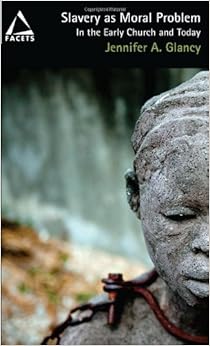
The first course, which will be launched in March, is called Slavery as Moral Problem in the Bible.  It is based on a study guide I created earlier this year and uses Jennifer Glancy's Slavery as Moral Problem in the Early Church and Today as its primary textbook.

If you're interested in learning more, check out the full description here.

Screenshots of the class page can be seen here.

Tuesday, December 31, 2013

iTunes U: Courses in Classics and Biblical Studies

Every time class registration rolled around I would pore over the course listings for the many different departments at the university, wishing I had an endless amount of electives I could take.  Now with things like iTunes U I can sit in on lectures in some of those classes outside of my major that I just wasn't able to fit into my degree program, whether its psychology, history, or physics.  This interdisciplinary online buffet also includes some good resources in my areas of focus, the ancient world and religious studies.  Below are a few that you might want to check out.  I've broken them down into four categories: (1) Biblical Studies, (2) Ancient Greece, (3) Rome, and (4) Religious Studies.  When you're done with all of these, why not move on to learn about Quantum Mechanics?

Biblical Studies
Christine Hayes
Open Yale course
[Check out Hayes' openyalecourses book Introduction to the Bible)

Shaye J.D. Cohen
Harvard, iTunes U

Dale B. Martin
Open Yale course 
[Check out Martin's openyalecourses book New Testament History and Literature)

Stanford, iTunes U

Steven Schweitzer
AMBS, iTunes U

Daniel B. Wallace
The Center for the Study of New Testament Manuscripts, iTunes U


Ancient Greece
Gillian Shepherd
LaTrobe, iTunes U

Gillian Shepherd
LaTrobe, iTunes U

Thursday, December 12, 2013

Disability and Eschatology: Resources in the Hebrew Prophets

One of the ways that communities can challenge ableism is to self-critically reflect on how disability fits into our conceptions of Utopia.  In our idealized visions of the world, are there persons with disabilities?  How we answer this question can reveal a lot about our attitudes towards disability, and can shape the way we engage related issues in our world.  Recently I have been giving some attention to the issue of disability and eschatology, looking in particular at Judeo-Christian visions of idealized or restored futures from a disability justice perspective.  There are of course plenty of eschatological imaginings, both ancient and modern, which leave no room for disability, but rather envision the elimination of persons with disability or their transformation so that they conform to ableist assumptions about ideal bodies/minds.  From a constructive perspective, I personally think it is important for both secular and religious communities to develop eschatological visions which continue to include persons with disabilities, but have social orders in which all are granted equal access and dignity.  So, one of the things I have been doing is looking for examples, particularly in ancient texts, that can be interacted with in constructing these kinds of eschatologies in western worldviews.  Here are a few interesting examples from the Hebrew prophets:
"Behold, I will bring them from the north country, and gather them from the farthest parts of the earth, among them the blind and the lame, the woman with child and her who is in travail, together; a great company, they shall return here.  With weeping they shall come, and with consolations I will lead them back, I will make them walk by brooks of water, in a straight path in which they shall not stumble; for I am a father to Israel, and Ephraim is my first-born" (Jeremiah 31:8-9).     
"In that day, says the LORD, I will assemble the lame and gather those who have been driven away, and those whom I have afflicted; and the lame I will make the remnant; and those who were cast off, a strong nation; and the LORD will reign over them in Mount Zion from this time forth and for evermore" (Micah 4:6-7).

"Behold, at that time I will deal with all your oppressors. And I will save the lame and gather the outcast, and I will change their shame into praise and renown in all the earth.  At that time I will bring you home, at the time when I gather you together; yea, I will make you renowned and praised among all the peoples of the earth, when I restore your fortunes before your eyes,” says the LORD" (Zephaniah 3:19-20).

Friday, October 11, 2013

Review: "Inheriting Abraham: The Legacy of the Patriarch in Judaism, Christianity, and Islam."

Since the Torah portion for this week is Lech Lechah, which begins with the calling of Abram, I thought it would be an appropriate time to post a brief review of Jon D. Levenson's fascinating new book on Abraham.  

In an age of ecumenism and interfaith dialogue Abraham is often touted as a source of unity and fraternity among western religions like Judaism, Christianity, and Islam, all of which are called "Abrahamic faiths."  But while Jews, Christians, and Muslims all cherish father Abraham, they have distinct traditions and sources that they use to understand the patriarch.  Thus Abraham can actually illustrate the differences between the faiths as much as, or perhaps more than, he can serve as a source of unity.  In his Inheriting Abraham: The Legacy of the Patriarch in Judaism, Christianity, and Islam Jon D. Levenson questions the idea of Abraham as a unifier by exploring the different ways these western faiths have received and understood the patriarch, with particular attention given to Abraham in the Jewish tradition.  

At its heart Inheriting Abraham is a fascinating work on the history of interpretation that also raises important questions about the nature of religious traditions and contemporary interfaith dialogue.  Levenson gives a good deal of attention to what the book of Genesis tells us about Abraham.  But along the way he emphasizes that the book of Genesis by itself cannot tell us what Abraham has meant and continues to mean for the Abrahamic faith communities.  For Muslims Genesis is not canonical, so it is actually the Qur'an that provides the primary source for understanding Abraham's significance.  While Jews and Christians do consider Genesis canonical, both faiths have additional traditions about the patriarch that shape their understanding.  The Protestant impulses ingrained in our culture might urge us to get behind these traditions to the "real" Abraham, but the figure that we would end up with would not be the Abraham who is meaningful to Jews, Christians, or Muslims.  And how can an Abraham who is foreign to these faith traditions or which privileges one tradition's methods or sources over another foster real unity or dialogue?  In his conclusion Levenson argues: 

Tuesday, September 24, 2013

Thru the Torah in a Year

Simchat Torah takes place this week, which means that the Jewish annual Torah reading cycle is about to restart.  In Jewish tradition the Torah is divided up into 54 sections which are read throughout the course of a year.  Even if you're not Jewish you might consider spending a year tracking along with the weekly readings.  If you're a student of ancient literature, the Torah is an incredibly fascinating and engrossing anthology, and giving it a year of sustained study will be very rewarding.  If you've studied Hebrew the weekly Torah portion is a great way to keep your reading skills sharp.  If you're a Christian, the Torah/Pentateuch is the heart and soul of the Old Testament, and contains an interesting blend of texts that most of us are overly-familiar with (the Garden of Eden for instance) and texts that most of us have never touched (like just about all of Leviticus).  This means that reading the Torah through the year will give you the opportunity to see familiar texts with fresh eyes and encounter unfamiliar texts perhaps for the first time.  It's also a lot shorter than the "Bible in a year" reading programs many churches do.

Some resources you might find useful:

General Resources
Reading Schedule
This tells you what sections to read each week.

Chabad.org Parsha Resources
Resources on the weekly portion.

Aish.com Torah Portion Resources
More weekly resources.

Torah from JTS
Torah commentary from the Jewish Theological Seminary

The Torah: A Beginner's Guide by Joel S. Kaminsky and Joel N. Lohr
This is a great basic overview of the Torah that gives attention to historical issues as well as the use and interpretation of the Torah in both the Jewish and Christian traditions.  Affordable and accessible.  

The Bible as it Was by James L. Kugel
I try to recommend this book or its more expansive brother as often as I can.  Kugel gives us insights into how the earliest interpreters of the Torah understood it.

Exploring the Old Testament: A Guide to the Pentateuch, by Gordon J. Wenham 
This is a good introductory textbook on the Pentateuch.


Saturday, July 20, 2013

Israel's White Collar Criminals

If a priest breaks the law does that make her a "white collar" criminal?  (Sorry, if you're looking for good jokes a blog on the ancient world is probably not the place you're going find them)

I recently prepared a sermon on Amos 8:1-12, a passage that includes the Hebrew prophet Amos' vision of the summer fruit basket (see our discussion of that here) and one of his many condemnations of the rich oppressing the poor.  When we read a text like that from the perspective of the ancient historian, we might wonder what exactly the wealthy were doing in Amos' 8th century context to oppress the poor.  What did "trampling" on them look like?  What was the nature of ancient white collar crimes?

Thursday, July 18, 2013

Fruit Baskets: how foreboding can they be?

If 8th century prophets had directed The Godfather that horse head scene might have involved a basket of figs instead.  

Amos, an 8th century BCE prophet who was lucky enough to get included in the Hebrew Bible/Old Testament, had some visions.  One of them involves a fruit basket:


"Thus the Lord YHWH showed me: behold, a basket of summer fruit. And he said, “Amos, what do you see?” And I said, “A basket of summer fruit.” Then YHWH said to me, “The end has come upon my people Israel; I will never again pass by them. The songs of the temple shall become wailings in that day,” says the Lord YHWH; “the dead bodies shall be many; in every place they shall be cast out in silence.” (Amos 8:1-3; RSV)

Monday, July 15, 2013

PRISM: Ancient Persian Edition

The recent leaks from Edward Snowden have brought government spying into popular attention, particularly PRISM, which is an extensive NSA electronic surveillance program.  It turns out the U.S. government is using some advanced technology to keep an eye on us.  Fortunately, I don't need to worry about the NSA reading what I write here, because even super computers and government spies are bored by the history of the ancient world.

While the specific technologies may be new, government surveillance is quite ancient.  The rulers of ancient kingdoms needed to keep tabs on their subjects, and they developed surveillance and communication methods to make this happen.  Oppenheim states this quite strongly when he says: "Informers, accusers, internal spies, censors, secret agents and their like form, in all these civilizations, then as well as today, an effective and often unobtrusive web, that with constant vigilance and demonic effectiveness directs, controls and coerces the individual in his social setting." ("Eyes of the Lord" 180)